The SR-3
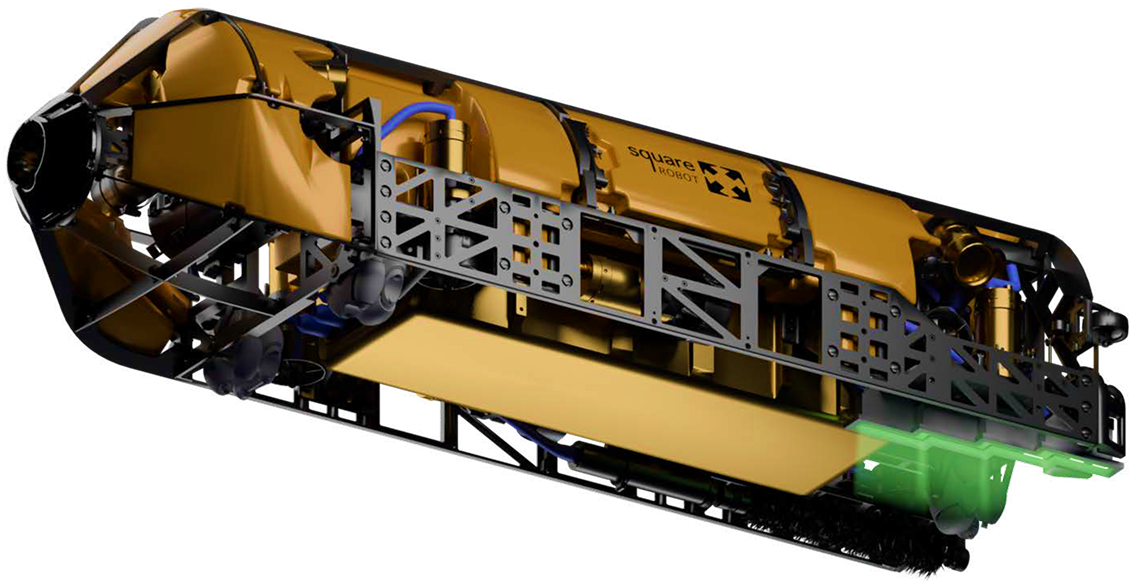
Sediment is a significant environmental challenge for in-service tank floor inspection. Square Robot's upgraded Sediment Removal System (SRS) clears sediment from the tank bottom ahead of the robot's phased-array ultrasonic (PAUT) probes, so more of every scan line produces usable floor thickness data, even in heavily sedimented areas.

Over years of service, almost every storage tank accumulates something on its floor: sand, scale, rust, sludge, or settled product. During an out-of-service inspection, that material is cleaned out before anyone goes in. During an on-stream inspection, it is still there, sitting between the robot and the steel it needs to measure.
Phased array ultrasonic testing (PAUT) works by sending sound through the floor plate and reading the echoes that come back. When the probes ride on top of a layer of scale or sludge rather than close to the steel, the signal weakens and the tank bottom can fall outside the probe's acoustic window. The robot is still scanning, but the data from that pass may not be usable. Heavy sediment can also disturb the robot's navigation, making it harder to hold accurate track lines.
In past inspections, a few inches of consolidated sediment was enough to make inspection difficult, interrupting navigation and decreasing usable data. That experience, repeated across the industry's dirtiest tanks, is what drove the redesign.
The newly upgraded SRS was not designed to turn the robot into a tank cleaner. Its goal is simple: displace sediment settled on the tank bottom to produce better, more usable PAUT data, so operators get a more complete picture of their tank floor without taking the tank out of service.
The original SRS used a single rotary brush. It could stir up the top layer of loose material, but in consolidated sediment environments, it did little to clear the floor ahead of the probes. The new system replaces it with a multi-stage design:

Before going to the field, the ducted SRS was put through a series of trials in Square Robot's Westborough test tank, using layers of sand and mixtures of sand and steel washers to simulate loose sediment and heavier debris. Each test compared the new design against the original brush at the same height above the floor.
The ducted SRS is now installed on all SR-3 robots, alongside ducted X-axis thrusters that improves output efficiency and in turn robot mobility in sediment. View results of data collection with the upgraded SRS system on Square Robot’s YouTube channel.
If you’re worried about data quality across your tank bottom due to sediment, the upgraded SRS is designed for exactly that case. Combined with the SR-3's improved mobility and extended temperature range, it opens up tanks that may not have been good candidates before. Learn more about the SR-3 platform and our on-stream inspection services, or read our guide on what robotic tank inspection is.
Yes. In-service robots routinely inspect tanks with sediment. Heavy, compacted, or sludgy sediment can reduce the quality of ultrasonic data, which is why Square Robot developed the ducted SRS to clear material ahead of the PAUT probes.
No. The SRS moves sediment out of the robot's scan path to improve data quality. It is not a tank cleaning system, and the tank's sediment remains in the tank.
The ducted SRS is standard on the SR-3.
Square Robot reviews product, tank construction, and expected sediment conditions before every job. Contact our team for a tank candidacy assessment.