The SR-3
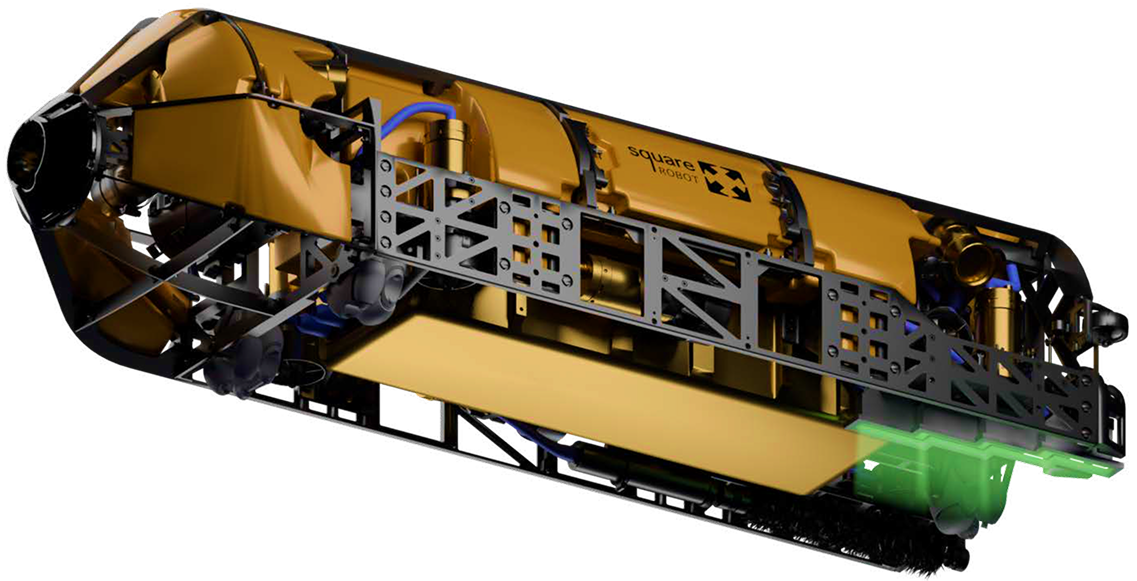
A sit down with Billy Yackel, API 653 and API 570 Certified Inspector at Square Robot. Last updated October 2026.
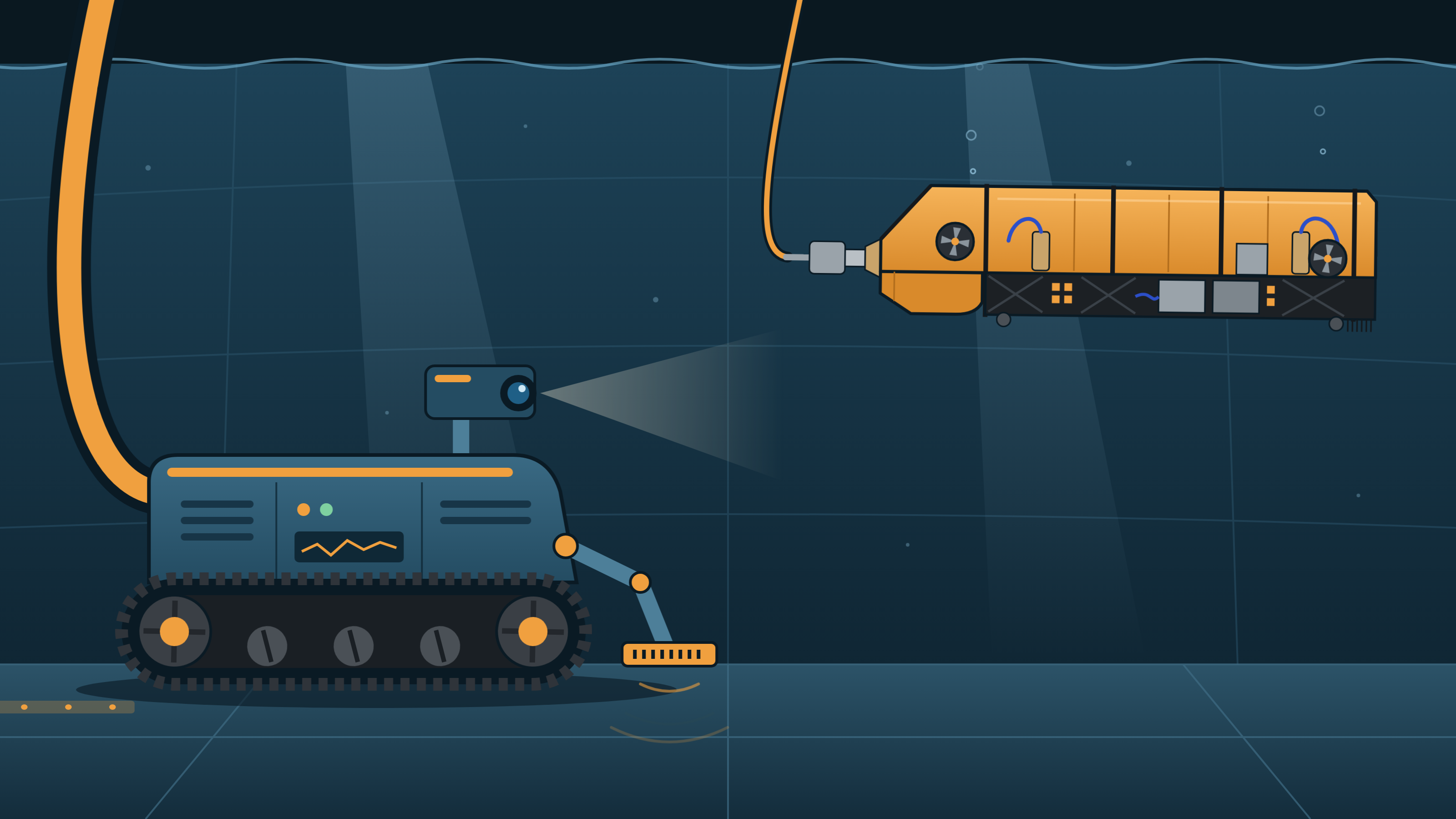
In-service tank inspection robots come in two basic designs: crawlers, which drive along the tank floor on wheels or tracks, and swimmers (submersibles), which move freely through the stored product. Both can support API 653 compliance. They differ sharply in how they’re deployed into tanks, where they can reach, how much of the floor they scan, and how well they handle sediment, which is why the choice matters for every tank in your program.
Billy Yackel has run more than 500 in-service robotic tank inspections over 18 years, starting on hydraulic crawlers and now working with Square Robot's submersible fleet. This guide draws on that experience to lay out how the two robot types compare and how to decide between them.
Crawler robots are heavy, box-shaped vehicles that drive on the tank floor much like a car or a military tank. These robots are all launched through a tank roof manway. Older units are hydraulically driven, using oil pressure delivered through a 4–6 inch umbilical, "just like forklifts out there." Newer electric crawlers use a smaller umbilical. Crawlers were the industry's first in-service robots: InTank units built by Praxair around 1990 are still in use today.
.png)
Swimmer (submersible) robots can be launched through both a tank roof and shell manway, are lighter and maneuver through the product itself. They can hover, spin in place and reposition anywhere in the tank, which lets them reach areas a floor-bound vehicle cannot. Square Robot's robots are in this category.
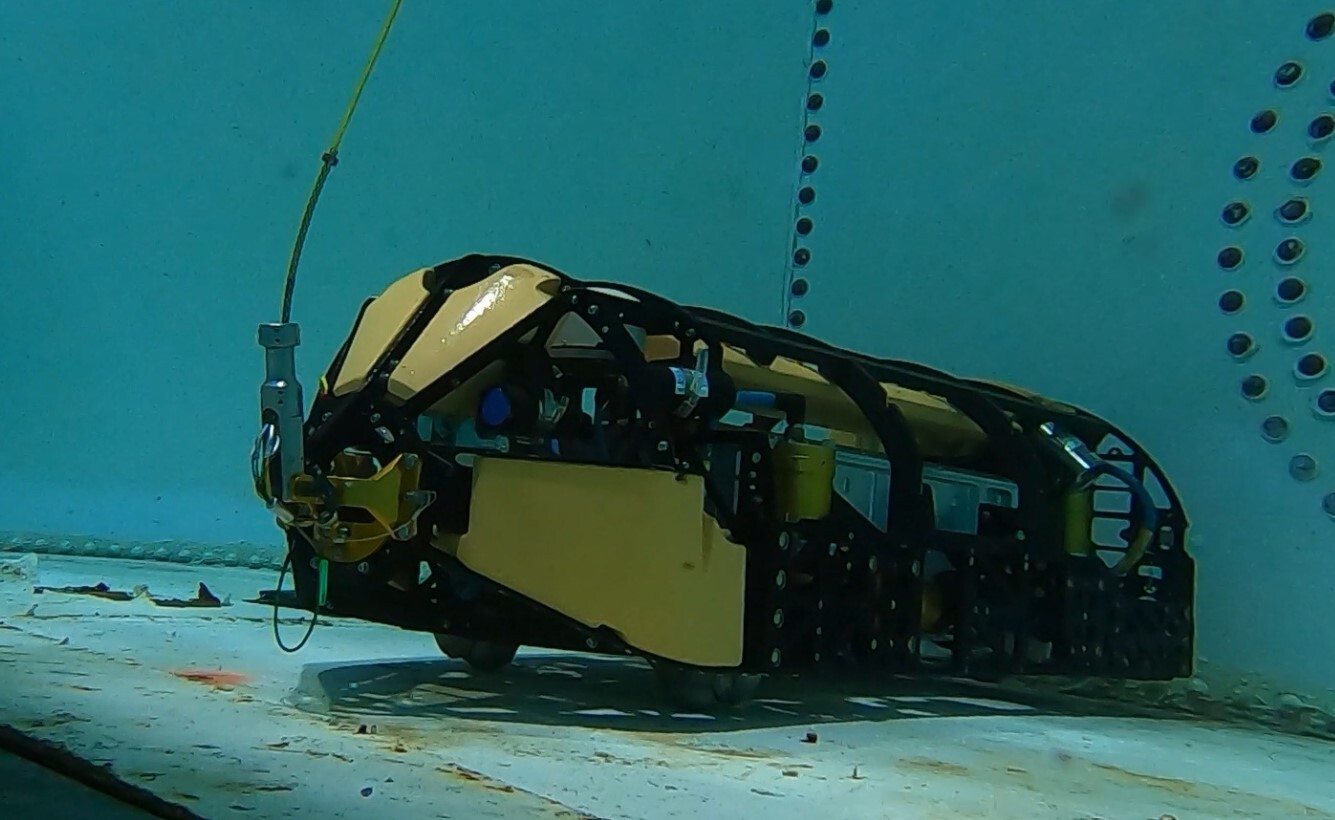
The industry has seen continued growth. In the last 10–15 years, Billy estimates the number of in-service robotics companies has grown into the dozens, especially when looking at the international landscape.
Factor | Crawler | Swimmer / submersible |
Critical zone (shell-to-floor) | Can't get close to the shell | Can access the critical zone |
Floor coverage | 8–12 ft straight lines, scattered | Whole accessible floor |
Maneuverability | Car-like; can get trapped parallel to the shell | Hovers, spins, repositions |
Appurtenances and tight spaces | Blocked by boxy body | Works around them |
Heavy sedimentation | Pushes through; can mount a vacuum | Harder to move |
Bolted tanks | Wheels stick or break; transducers scrape | Travels above the bolts to scan tank bottom plates |
Deployment weight | ~1,500 lb hydraulic units | Lighter (~250 lb) |
API 653 compliance | Can be compliant but typically with low coverage, requiring a supplement EVA | Meets and exceeds the track-line minimum |
For most tanks, swimmers do. A crawler's payload sits in the center of its body, so it can't scan up against the critical zone, and its track lines leave most of the floor unexamined. A swimmer can scan the full accessible floor, including the zone where the shell meets the floor.
"Most crawler robots give you track lines here, there, just scattered all over," Billy says. "Square Robot comes in and we're actually scanning the whole floor plate that's accessible."
Crawlers have a real advantage in tanks with very heavy sedimentation. Because they are heavier and travel in straight lines, they can push sediment aside more easily than a lighter swimmer. They are also easy to modify: Billy ran one crawler fitted with a vacuum that removed sediment ahead of the transducers before they passed over the plate.
Crawlers can also physically operate in crude oil tanks. Whether they produce good data there, Billy notes, "he hasn't seen it been proven yet."
The trade-offs are significant:
The area where the shell meets the floor is one of the most failure-prone parts of a tank, and it is exactly where crawlers can't reach.
Track-line inspections satisfy API 653 as written today. But Billy is clear that compliance and confidence are not the same thing: track lines "check all the boxes as far as your codes go," yet they don't show an inspector what is really happening inside the tank.
"If you can't get that area right in there, then you're really not giving me a good inspection for an in-service tank," he says. Given only scattered track lines, he would rather take the tank out of service for a visual inspection and MFL floor scan. A swimmer that scans the accessible floor and reaches the critical zone gives inspectors data they are willing to put their name on.
Billy holds API 653 and API 570 certifications, NACE, STI and cathodic certifications, and is a certified Level II inspector. Over 30+ years he has inspected tanks, pressure vessels and piping, and spent about 18 years in in-service robotics. A few lessons stand out from that experience.
There's no such thing as a clean tank. "A lot of people think, oh, it's a gas tank or a jet tank, then it’s a clean tank. There's no such thing as a clean tank, unfortunately." Product type and sediment load should drive the inspection method for each tank.
The environment around a tank drives corrosion. The side of a tank facing a cooling tower corrodes fastest, because mist and moisture break down the coating. Sun exposure matters too: the cooler side stays moist longer.
Traditional inspection still has a place. Out-of-service inspection "is still one of the best ways to inspect a tank, but is not the most cost-effective every time." Robotics can be more effective in data density as well as cost effectiveness for tanks that are costly to take offline, or can’t come offline.
That is why he joined Square Robot. "They're getting the most critical areas of a tank that other traditional or in-service robotics can't get."
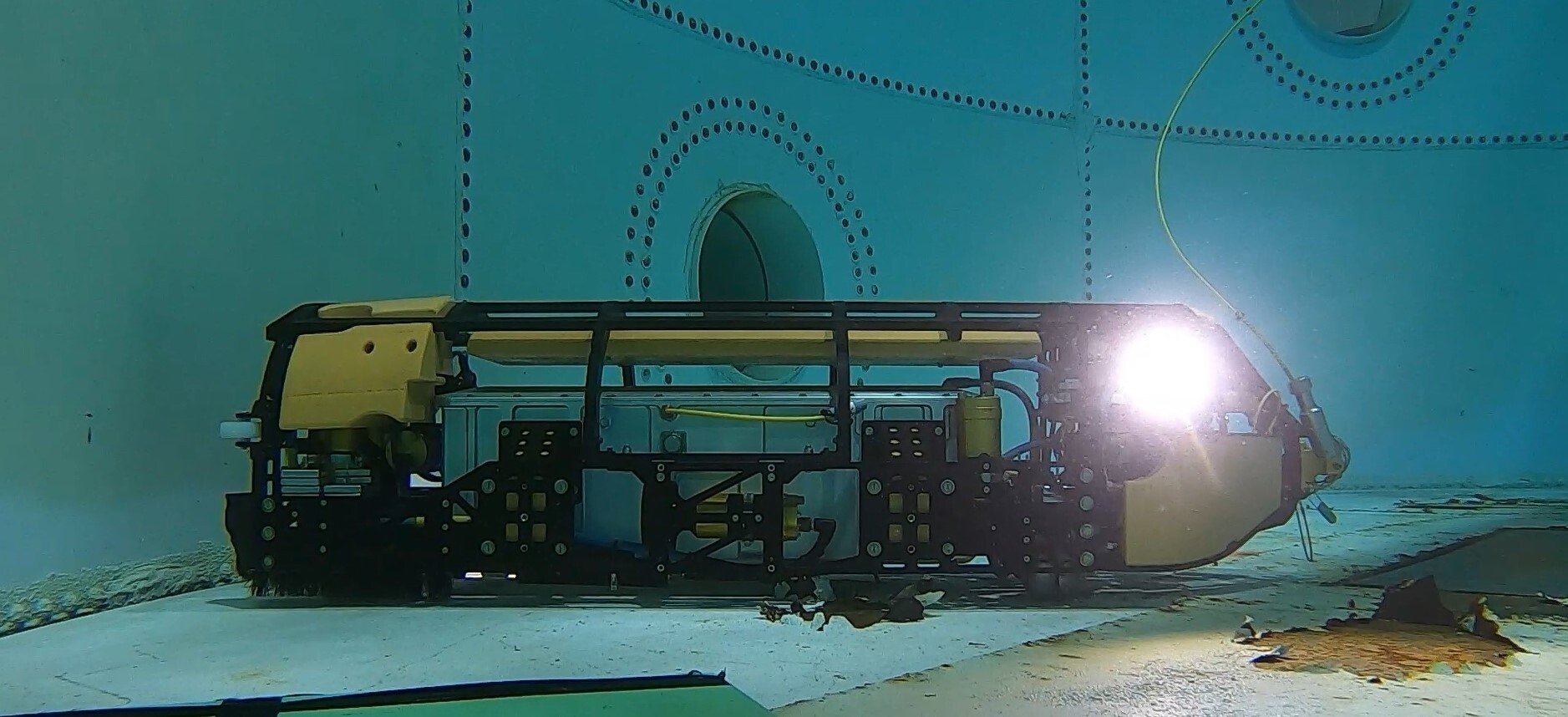
Work through these four questions for each tank in your program:
Yes, as the standard is written today. But track lines of 8–12 feet scattered across the floor leave most of the plate unscanned and miss the shell-to-floor zone.
A crawler can physically operate in crude. Whether it produces reliable inspection data in that environment hasn't been proven.
Hydraulic crawlers run on oil pressure through a 4–6 inch umbilical, much like a forklift. Electric crawlers carry power down a smaller umbilical. Both drive on the floor and share the same reach limits.
Mist and moisture from the cooling tower hit that side of the tank, break down the coating and start corrosion on the floor, shell and roof.
Put together: crawlers still earn their place in tanks with very heavy sediment, but swimmers trade that one advantage for full-floor coverage, access to the critical zone and data an inspector will sign. To see how a robotic in-service inspection fits your tanks, talk to a Square Robot inspector.